
Have you ever been in a car accident where the airbag deployed? One moment, you’re behind the wheel, and the next, you’re jolted forward with a loud pop, cushioned by an explosion of fabric. Airbags are one of the most important safety features in modern vehicles and help save countless lives. But despite their life-saving capabilities, they’re not completely harmless. In fact, the force of an airbag can sometimes lead to car accident injuries, including concussions.
Airbags: Designed to Save Lives, But Not Without Risks
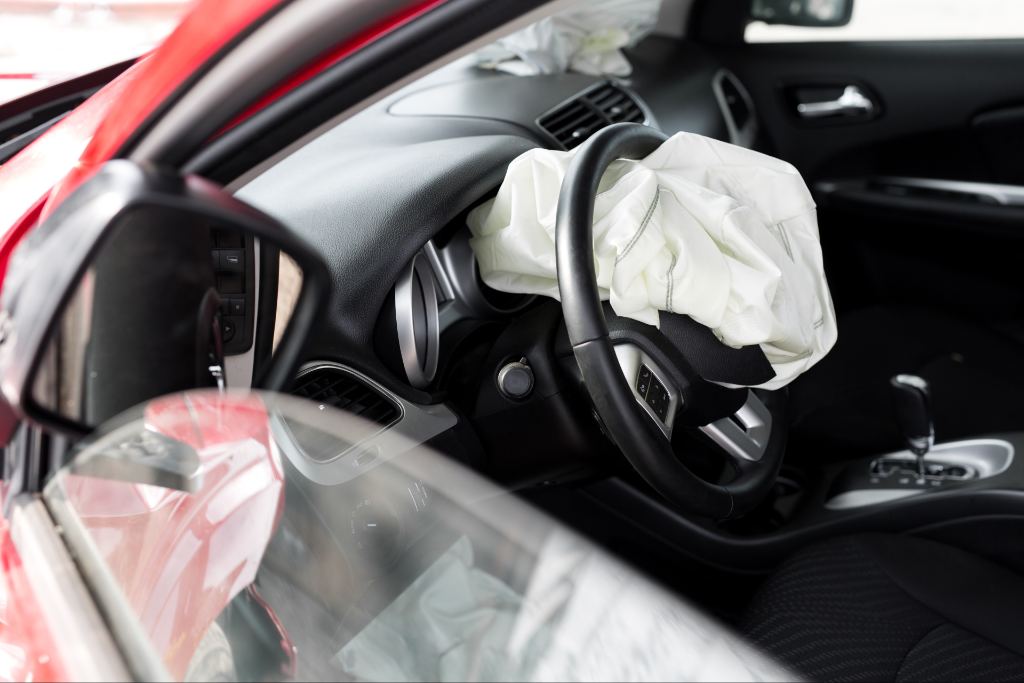 When you’re in a crash, an airbag can deploy in as little as 20 milliseconds. That’s faster than the blink of an eye! This rapid deployment is necessary to cushion your body before it collides with the steering wheel, dashboard, or windshield. But with that much force, it’s no surprise that airbags can also cause injuries, especially when sitting too close to the airbag or not wearing a seatbelt properly.
While airbags are a crucial safety component, airbags have been associated with a number of injuries and side effects of airbag deployment, including:
- Facial injuries from the impact
- Burns or abrasions from the airbag material and chemicals
- Neck and chest injuries due to sudden force
- Eye injuries from the dust or pressure
- And yes, concussions
Just like any other powerful force acting on the body, an airbag’s deployment can whip the head and neck around, slam the head against the seat or window, or simply impact the skull hard enough to jostle the brain. That’s when a concussion can occur.
What Is a Concussion?
A concussion is a type of traumatic brain injury caused by a sudden blow, bump, or jolt to the head or even a forceful movement of the head and body that causes the brain to shift inside the skull. Concussions can affect brain function temporarily, and while they’re often categorized as mild brain injuries, they should never be taken lightly.
Can an Airbag Really Cause a Concussion?
Yes. When an airbag deploys, it inflates rapidly with intense force. That kind of velocity can:
- Cause your head to snap backward or forward, triggering a whiplash motion that jostles your brain inside the skull.
- Propel your head into the headrest, steering wheel, or window, especially if you’re not centered properly in your seat.
- Cause a direct impact from the airbag itself, especially if your head is close to the steering wheel when it deploys.
All these scenarios can result in a concussion, and depending on the severity of the crash, a person may experience more than one cause of head trauma during the same accident.
Other Causes of Concussion in a Car Accident
While airbags are one potential culprit, they’re not the only cause of a concussion during a car crash. Other ways you could sustain a concussion include:
- Hitting your head on the window, dashboard, steering wheel, or another object
- Being rear-ended, which often causes whiplash and associated brain trauma
- Objects flying around in the car and hitting your head
- Ejection from the vehicle, in extreme cases
Symptoms of a Concussion After a Car Accident
Concussion symptoms may not show up immediately after an accident. In fact, some people feel fine right after the crash, only to start experiencing symptoms hours or even days later. Common symptoms of a concussion after a car accident include:
- Headache or a feeling of pressure in the head
- Dizziness or balance issues
- Confusion or feeling foggy
- Nausea or vomiting
- Sensitivity to light or sound
- Blurry vision or ringing in the ears
- Fatigue or sleep disturbances
- Memory problems or trouble concentrating
- Mood changes, like irritability, anxiety, or depression
If you’ve experienced any of these symptoms after an accident, especially if an airbag deployed or you hit your head, it’s important to see a car accident doctor as soon as possible.
Diagnosing a Concussion
At AICA Orthopedics, we specialize in treating patients who’ve been injured in auto accidents, including people suffering from concussions and other head injuries. A car accident doctor is trained to spot the subtle signs of a traumatic brain injury and knows what imaging and diagnostic tests to use to confirm the diagnosis.
What to Expect During Diagnosis
Diagnosing a concussion typically involves:
- Reviewing your medical history and details of the accident
- Neurological exams to assess balance, reflexes, memory, and coordination
- Cognitive tests to evaluate attention, concentration, and problem-solving
- Diagnostic imaging tests, such as CT scans or MRIs, when necessary, to rule out bleeding or more serious brain injury
The sooner you get evaluated, the better. Untreated concussions can lead to long-term problems, especially if you experience more than one in a short time.
Treatment Options for a Concussion After an Accident
Concussions are typically treated with a combination of rest, rehabilitation, and specialized care, depending on the severity of the injury and your symptoms. Here are some examples of at-home care and treatment from a car accident doctor near you.
At-Home and Noninvasive Care
For many mild concussions, at-home treatment is the first and often most important step in recovery. The brain needs time to rest and heal after this type of significant trauma, and this involves more than just physically resting — it also requires cognitive rest. This means limiting activities that require intense mental focus or screen time, including working on a computer, playing video games, watching TV, or even texting.
Hydration and proper nutrition also play a critical role in supporting brain healing. Drinking plenty of water helps maintain optimal brain function, while a balanced diet rich in antioxidants, healthy fats, and vitamins supports cellular repair and reduces inflammation. Sleep is also essential for concussion recovery. During sleep, your brain can repair damaged tissues.
As your symptoms gradually improve, it’s important to slowly and carefully return to daily activities without pushing yourself too hard. This means starting with light activities and gradually increasing cognitive and physical demands while monitoring for any return or worsening of symptoms.
If any symptoms reappear or intensify, it’s important to step back and allow more rest. Throughout this process, staying in touch with your car accident doctor is important to make sure your recovery is on track and to determine when it’s safe to resume full activity.
Chiropractic Care
Chiropractic care can be a valuable part of your concussion recovery, especially if you experienced neck pain, spinal misalignment, or whiplash during your car accident. The sudden impact of a crash, especially when an airbag deploys, often causes the neck and upper spine to shift out of alignment. This misalignment can lead to lingering headaches, dizziness, or nerve irritation that worsens concussion symptoms.
A chiropractor can perform gentle, targeted adjustments to restore spinal alignment, reduce nerve pressure, and improve overall nervous system function. At AICA Orthopedics, our car accident chiropractors are experienced in treating injuries and work hard to make sure you’re healing safely and effectively.
Physical Therapy
Physical therapy can also play a key role in your concussion treatment plan, especially if you’re dealing with balance problems, dizziness, muscle weakness, or difficulty coordinating movements. After a brain injury, the connection between the brain and body can become disrupted, causing instability and fatigue even during simple activities.
Physical therapists use exercises and techniques to help retrain the brain, improve your stability, and restore muscle strength. Vestibular rehabilitation therapy is a specialized type of physical therapy that helps target dizziness and balance issues caused by inner ear and brain dysfunction. Our physical therapy team at AICA Orthopedics personalizes each treatment plan to match your symptoms and recovery goals.
Neurological and Orthopedic Treatment
In more severe or complex cases, your treatment plan may involve both neurological and orthopedic specialists. A neurologist focuses on how the concussion has affected your brain function and can perform the necessary assessments if you’re dealing with cognitive symptoms, severe headaches, or visual disturbances.
In some cases, repeated diagnostic imaging such as MRIs or CT scans may be recommended to rule out more serious brain injuries. Your orthopedic doctor can evaluate and treat any musculoskeletal injuries, such as whiplash, spinal trauma, or joint damage, that may be contributing to your discomfort or limiting mobility.
Why Choose AICA Orthopedics for Post-Accident Concussion Care?
At AICA Orthopedics, we’ve helped thousands of car accident victims recover from concussions, whiplash, and other injuries caused by airbags and collisions. Our team includes orthopedic doctors, neurologists, chiropractors, physical therapists, and imaging specialists, all working together to create a treatment plan that gets you back to feeling like yourself again.
Whether your airbag caused a mild concussion or you’re dealing with a persistent headache after a car wreck, we’re here to help you every step of the way, from diagnosis to recovery. Plus, with access to advanced diagnostics, on-site imaging, and a multidisciplinary team, AICA Orthopedics offers comprehensive care all under one roof.
Schedule an Appointment with a Car Accident Doctor Today
If you or a loved one has been in a car accident and suspect you may have a concussion, don’t wait to get checked out. Early diagnosis and treatment can make a huge difference in your recovery.
At AICA Orthopedics in Snellville, we offer same-day appointments, on-site imaging, and specialists trained in car accident injuries. Call us or schedule your appointment online today and let our experienced team help you heal.